[ad_1]
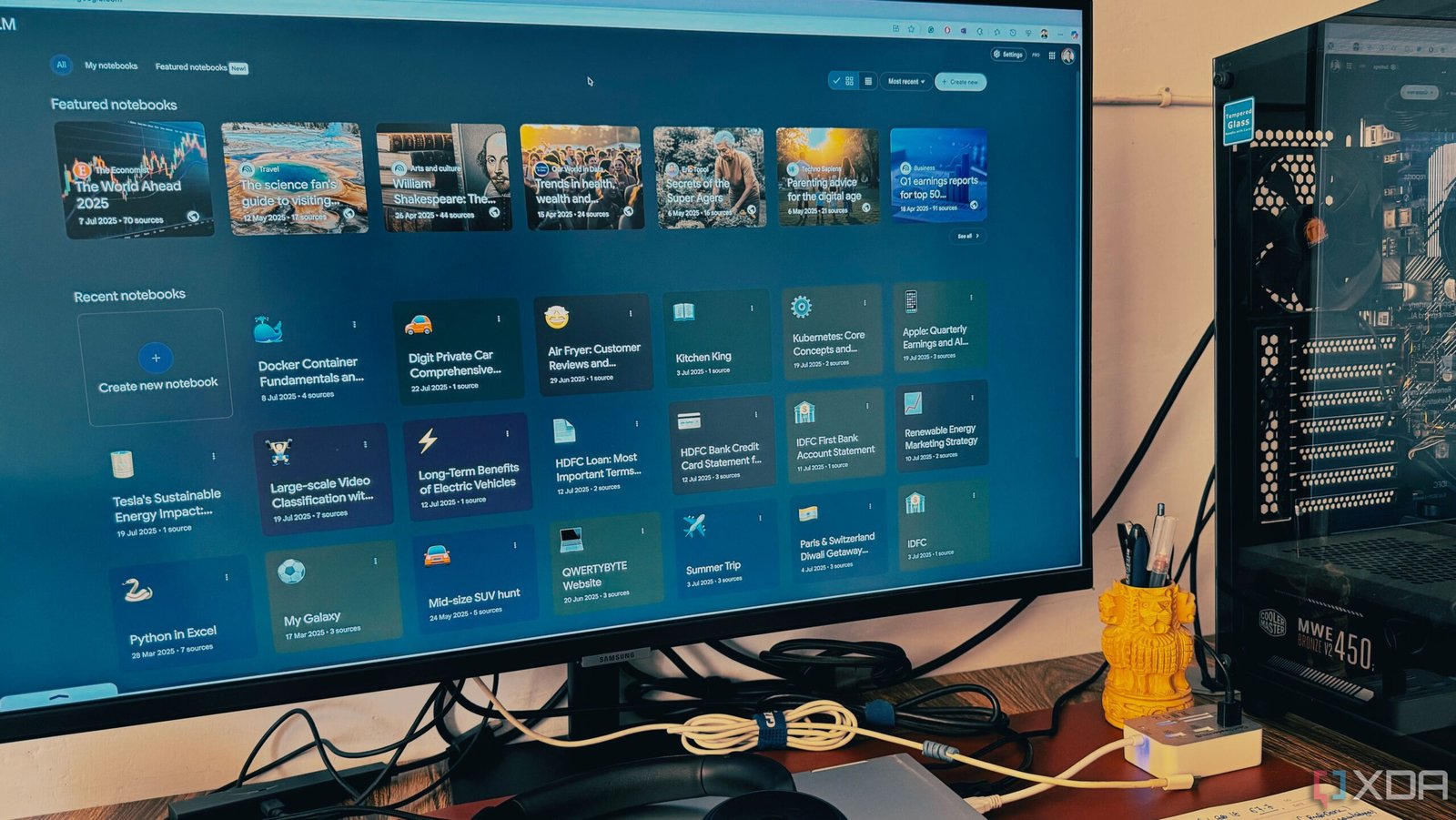
When I first started using NotebookLM, I thought I had it all figured out. I imported every document I could find, highlighted every interesting phrase, and asked it relevant questions. However, I quickly realized that without a strategy, this powerful tool was just another place for my notes to get lost. So, I took a step back, learned from my mistakes, and discovered how to truly harness NotebookLM’s potential.
Here are the key lessons I learned so you can avoid the same initial frustration and turn NotebookLM into the efficient partner it’s designed to be.
Skip it!

When I first started, I thought the ‘Discover’ menu in NotebookLM would be my research secret weapon. I would click it, describe my query, and find relevant, high-quality sources in no time. But I was wrong. More often than not, I would display irrelevant results that just wasted my time. I would have to manually sort through the junk, and it was a frustrating and inefficient process.
I soon realized a much better workflow. Instead of relying on the built-in feature, I began using a dedicated AI model like Perplexity to do my initial research.
It is fantastic at quickly finding and summarizing a wide range of credible sources. It has easily saved me hours of hunting. This two-step process allowed me to quickly fill my notebook with relevant, high-quality sources, and then use NotebookLM for what it’s best at: analyzing and organizing that information.
Selecting all sources during Q&A sessions
More isn’t always better

One of my earliest habits with NotebookLM was selecting all sources before asking a question. My thinking was that the more information I gave the AI, the more accurate and comprehensive its answer would be.
In reality, this approach was inefficient and slow. It took forever for the AI to process the vast amount of data, and the answers were often confusing due to various documents. This entire process was slow and frustrating.
I have since learned to be much more deliberate. Now, I only select the most relevant source from the sidebar before I ask a question. This is helpful when I’m looking for a specific detail that I know is in a particular document, YouTube video, or web link.
For example, if I’m researching cars and I need to find a specific detail like kerb weight or turning radius (details often buried deep in an official brochure), I will select only that brochure from the sidebar.
This simple change allows the AI to focus its attention and provide me with a precise and immediate answer.
Manually adding text as sources
Add Markdown files from external sources

Initially, my process was to simply copy and paste directly into NotebookLM. I would grab snippets from articles, emails, or PDFs and drop them into a new note. The result was a mess.
The formatting was inconsistent, and it made NotebookLM difficult to process effectively. My workflow is much more organized now.
I use Obsidian to create a single, well-structured document. I format the text with clear headings, bullet points, and bolded keywords. I admit that it’s a bit more work upfront, but it makes all the difference. When the document is complete, I upload the Markdown file as a source in NotebookLM.
Because Markdown is a structured format, NotebookLM can now understand the organization of my notes.
Relying only on files from Google Workspace apps
NotebookLM works with Microsoft 365 files too
When I first started using NotebookLM, I was under the impression that it only played nicely with Google’s own ecosystem – Docs and Slides. It made sense; after all, it’s a Google product. This was a bit frustrating for me because I have always preferred using Microsoft’s services.
I’m glad I didn’t give up on trying to bridge that gap. I discovered a simple and effective workaround: I export my Word and PowerPoint files as PDFs. This process is seamless and preserves all the formatting, images, and structure of the original document.
Then, I upload these PDFs directly to NotebookLM as sources. Now, I can continue to use my preferred Microsoft tools to create high-quality, organized content, and then leverage NotebookLM to analyze that information. It feels great to have the best of both worlds.
Learning from my NotebookLM errors
Mastering any new tool requires a bit of trial and error, and NotebookLM is no exception. While it’s a powerful platform for organizing your thoughts and documents, it’s also easy to get lost in the sea of information if you don’t have a plan.
So what are you waiting for? Keep my learnings in mind, create a new notebook in NotebookLM, and unlock a dynamic partner in your learning and creative process. However, be careful if you plan to replace all your productivity apps with Notebook. I experimented the same and failed miserably.
[ad_2]
Source link