[ad_1]
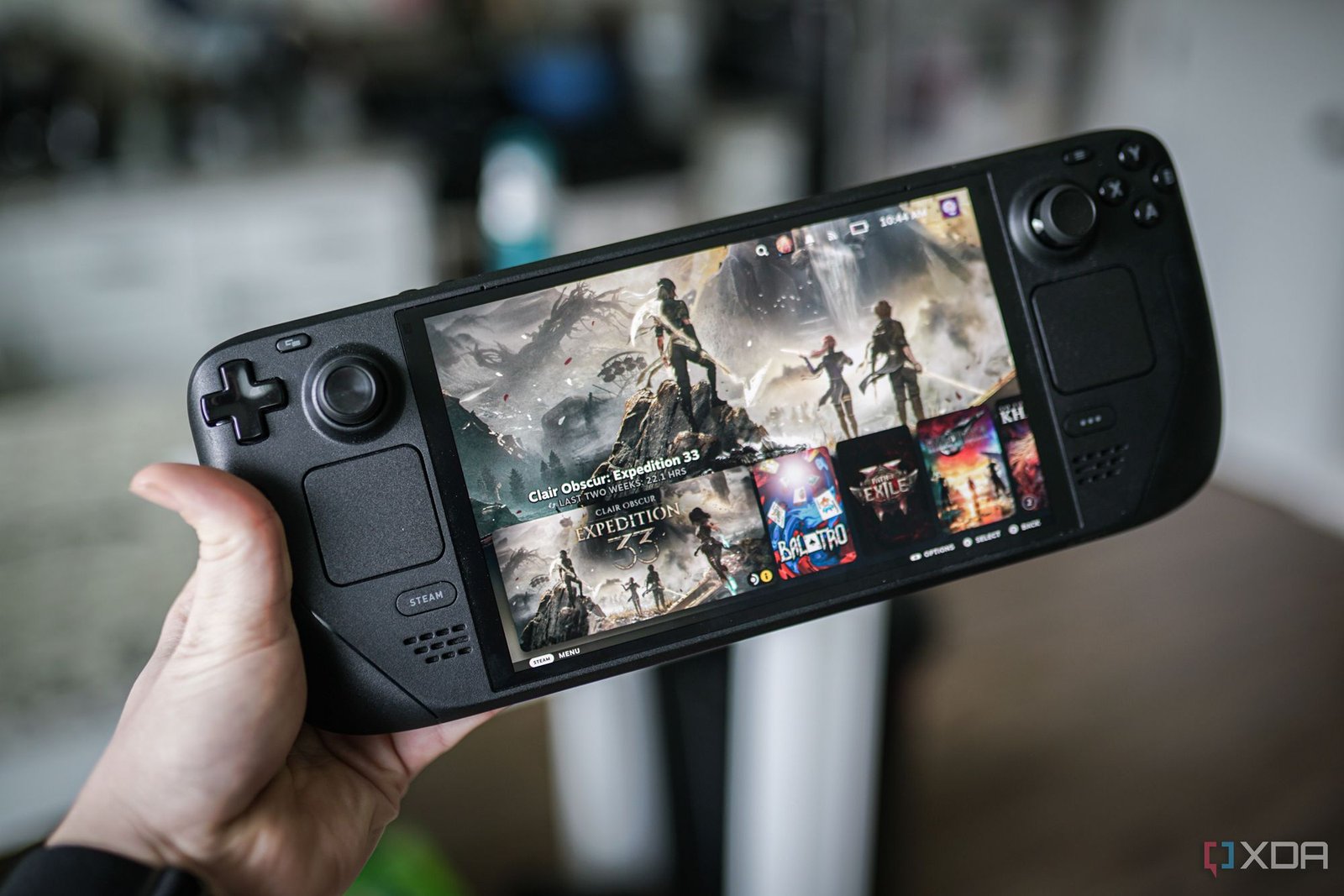
I’ve been a staunch Steam Deck supporter since the day the handheld was announced. I was in the first wave of pre-orders, I picked up the Steam Deck OLED immediately, and even in the face of half a dozen more powerful options from other brands, the Steam Deck remains the only handheld for me. But it’s getting difficult for me to put my stock in whatever the successor to the Steam Deck is.
Valve revolutionized the PC handheld market with the Steam Deck, but it’s a company that’s notoriously fickle with hardware releases. With more and more APUs designed for low-power applications like handhelds, the broad release of SteamOS, and a growing list of competitors that bring their own secret sauce, I just don’t care about the Steam Deck 2 anymore, regardless of what it would represent for the industry.

Related
SteamOS is here for everyone, and it’ll only get better
No more Bazzite — this is SteamOS proper
I didn’t realize how far along SteamOS was for a general release until I got my hands on the Lenovo Legion Go S. This is the first handheld that officially supports SteamOS, and arrived alongside the release of SteamOS 3.7, which added early support for other AMD-powered handhelds — basically everything short of the MSI Claw. The experience of SteamOS on the Legion Go S is seamless; it feels no different from using the operating system on the Steam Deck. The jankiest thing about it is that the power profiles aren’t capitalized in the quick access menu. I’ll take that for an experience that’s as clean as the Steam Deck.
It’s less about where we are today and more about where we came from, however. In April, just a handful of weeks back, Valve launched a preview of SteamOS 3.7.0. Our very own Joe Rich-Jones flashed it on the ROG Ally X, and the experience was far from ideal. Broken controller support, strange button mappings, and a temperamental update process made it basically unusable. Valve has not only released SteamOS 3.7.0 onto the stable channel now, it’s gone all the way to 3.7.8, and each update has fixed issues and improved support for other handhelds. Valve is so confident now that it includes instructions on how to install SteamOS on other devices.
That’s just the progress we’ve seen in the past few weeks. Flash back a year, and the idea of installing SteamOS on a non-Steam Deck handheld was a pipe dream. You’d have to use Bazzite, and before that something like ChimeraOS, to have a console-like experience on a Windows handheld. The Legion Go S opened the floodgates, and support for SteamOS on other handhelds will continue to improve at a rapid clip. If Valve’s current pace is anything to go by, I suspect we’ll look back in a few months’ time and see a radically different form of SteamOS support on handhelds that otherwise use Windows 11.
Valve makes some hardware, but it is and will always be a software company. I’m sure the Steam Deck 2 will be excellent once Valve decides it’s time to take another swing at handheld hardware, but I don’t see a world where the Steam Deck 2 can keep pace with the broader PC ecosystem. Brands like Lenovo, Asus, MSI, Ayaneo, and others will continue to push out new handhelds with the latest hardware and cutting-edge features. Valve won’t. It has already proven it won’t with the Steam Deck OLED and its impressive, yet aging, Zen 2-based APU.

Related
Linux users on Steam are on the rise, but SteamOS is just part of a larger story.
Hardware will always be a sacrifice
Price is crticial for the Steam Deck specifically

Valve has made it clear that it won’t make a Steam Deck 2 until it feels there’s a significant enough upgrade in capabilities to justify a new handheld. You could argue that we’ve already reached that point. The APU inside the Steam Deck has held up well, but it uses a quad-core CPU based on an architecture that’s six years old, and a GPU architecture that’s nearing five years old. There are several recent examples of games that either struggle or don’t run on the Steam Deck due to this aging hardware. Doom: The Dark Ages and Oblivion Remastered are prime examples of games with always-on ray tracing that struggle to run on a handheld that, despite RT-capable hardware, just isn’t powerful enough.
And make no mistake, the APU inside the Steam Deck wasn’t cutting-edge when the console was released. It was certainly capable, and it remains capable today for a wide swath of games. But Valve wasn’t concerned about having the latest and greatest, even with the original Steam Deck, and it likely won’t for the Steam Deck 2. There are two reasons for that — cost and its semi-custom relationship with AMD.
Cost is the most obvious point of contention. The Steam Deck, when it was released, wasn’t competing with the ROG Ally or the MSI Claw. It was competing with the Nintendo Switch, and to that end, Valve designed the handheld to reach a price of $400. I suspect most people spent $550 or more for a Steam Deck with more than 64GB of storage, but it’s clear that hitting a $400 base price was important for Valve. It remains important. With the launch of the Steam Deck OLED, rather than ditch the original LCD model entirely, it moved the 256GB configuration of the LCD model down to that $400 base price.

Source: Nintendo
That goal post will likely move now that we have the Nintendo Switch 2 at a $450 MSRP, but price will remain important for the Steam Deck 2. Valve hardware designer Shreya Liu told IGN that the Steam Deck was designed with price in mind “from the beginning,” and Valve’s CEO Gabe Newell went as far as to say the price was “painful,” but “critical.”
Valve was able to hit that price because it has a semi-custom chip from AMD. Valve’s relationship with AMD is more similar to the relationship AMD maintains with Microsoft and Sony, not the relationships it has with brands like Asus and Lenovo. AMD designed a custom APU using established architectures specifically for Valve, just as it did for the Xbox Series X and PlayStation 5. Brands like Asus and Lenovo are using chips that AMD already makes elsewhere. The hardware isn’t custom; some parameters are just tweaked to make that hardware more practical for a handheld.
I’m sure the Steam Deck 2, whenever it arrives, will be impressive. But I highly doubt Valve will ditch the design philosophy and semi-custom relationship with AMD to make a handheld packing the same hardware and capabilities as the swath of options from brands like Lenovo, MSI, and Asus. It will likely compromise on hardware, poking around a design with AMD, to reach a certain price point. And even if the next version of the Steam Deck is packing cutting-edge hardware at the time it releases, it’ll almost certainly be outclassed by another handheld delivered from a brand that focuses solely on hardware shortly after.

Related
I’m waiting for the Steam Deck 2, not the Nintendo Switch 2, and I know I won’t regret it
I love my Switch, but I’m going all-in on the sequel to the Steam Deck.
What other handheld brands could learn from Valve
The Steam Deck’s sequel is still vital

I may not care about the Steam Deck 2 from the standpoint of a consumer who is interested in buying handhelds. But I do care about it for what it represents for this growing industry. Valve set and maintains the standard for what a handheld gaming PC should look like. That’s true not only in usability and capabilities, but also support. Valve partners with iFixIt to deliver OEM parts, so users can repair their devices; it uses open-source software and open-sources its own, so the community can expand the capabilities of SteamOS. And it’s continued to put a downward pressure on prices. The Lenovo Legion Go seems expensive at $750, but that’s only because the Steam Deck is so much cheaper. Prior to the Steam Deck, you’d easily spend $1,200 or more on even a weak handheld gaming PC.
Valve set the pace for the industry, and it would be disastrous to lose that market leader. When one company demonstrates what the entire industry should be capable of, that raises the bar for everyone. Suddenly, things like expandable storage with a micro SD card and a user-upgradeable SSD become the standard, and companies like Lenovo and Asus go beyond with their own features like dual USB-C ports, a larger battery, and a higher-resolution display. The question for a device like the Legion Go S isn’t if it’s worth the money. It’s whether the upgrade is worth enough compared to the Steam Deck.
I hope Valve will continue leading the industry. At the end of the day, though, I highly doubt hardware was ever the endgame. It’s infinitely more lucrative for Valve to give away an operating system to other hardware vendors that’s built specifically around a storefront where it takes a 30% commission on every sale. I don’t care how many Steam Decks Valve sells; Steam itself will always be its golden goose. So, while I’m excited to see what Valve can do with a Steam Deck 2, I’m under no illusions that it will revolutionize the industry in the same way the original model did. The cat’s out of the bag, and thankfully, that means better handhelds for everyone.

Related
4 reasons I’m more excited about Valve’s Steam Box than a Steam Deck 2
A modern Steam Box sounds more enticing than a handheld refresh, it could be Valve’s next big move.
[ad_2]
Source link